

Bamboo plantation · Navata, Alt Empordà · 42°13′N 2°52′E


We grow bamboo in Catalonia, so Europe can build with a material that grows back.
Scroll down and follow the rhizomeSkip intro
Our mission
Sustainable bamboo forestry, rooted in Europe
At Camp Bú, we strive to establish a sustainable bamboo forestry practice in Europe, while promoting the use of bamboo as a versatile and eco-friendly alternative to traditional construction and manufacturing materials. Bamboo is a fast-growing, versatile, and eco-friendly biomaterial that has the potential to transform various industries while also contributing to climate change mitigation. Our international team of giant grass enthusiasts is committed to co-creating a more resilient and sustainable future for all by cultivating, researching, and selling both, running and clumping bamboo species, as well as educating people and spreading awareness on the benefits of bamboo and its various applications.
A bamboo economy
Less timber, less carbon
Focusing on developing a bamboo economy in Europe, will reduce our dependence on traditional construction materials, including timber, that heavily factor in deforestation and carbon emissions. By inspiring a shift towards more sustainable approaches to manufacturing and construction, our objective is to conduct research on optimising and greening the techniques in farming and manufacturing processes.
Local supply
Grown here, treated here
We intend to soon provide a reliable source of locally grown, locally treated bamboo culms and splits for European architecture and product designers. By soaking our harvested bamboo in boron solution, we ensure the highest quality of our products, while also reducing the reliance on shipping bamboo from distant regions.
The bigger picture
A model for bamboo forestry in Europe
Our ultimate goal is to establish a model of sustainable bamboo forestry in Europe that will encourage policymakers to recognise the benefits of bamboo cultivation and commercialisation. From restoring degraded lands and offering jobs for rural communities, to substituting the use of timber in manufacturing, bamboo offers solutions to a variety of ecological and social issues that we are facing today.
Open knowledge
Learn bamboo with us
At our farm, we are dedicated to sharing our knowledge and expertise with others, engaging in open-source knowledge culture, offering educational programs and workshops that teach people about the sustainability of bamboo and its numerous applications. Whether you're interested in starting your own bamboo plantation or learning hands-on bamboo craftsmanship, our team is here to support and guide you on your bamboo journey right here in Europe. By harnessing the potential of bamboo, we can create a greener, healthier, and more sustainable world for generations to come.
The film
We can grow the solutions
Watch the film, then meet the farm, the plants and the people behind them.
Get to know Camp BúAbout
A field of giant grass
Camp Bú is a bamboo plantation in Navata, a village in the Alt Empordà between the Pyrenees and the Mediterranean.
What we do
Cultivate
We grow running and clumping bamboo species and learn which ones thrive in a European climate.
Research
We study how to make bamboo farming and processing cleaner and more efficient.
Supply
We are working towards locally grown, boron-treated culms and splits for architects and product designers.
Teach
We run educational programs and workshops and share what we learn as open knowledge.
Runners and clumpers
Bamboo is a grass, and what happens underground decides how it spreads. We grow both kinds.
Running bamboo
Long, slender rhizomes travel sideways through the soil and send up culms along the way, like the one that draws itself down our intro.
Clumping bamboo
Short, thick rhizomes turn upward almost at once, so new culms rise close to the parent plant and the grove stays a tight clump.
Why bamboo
A culm reaches its full height in a single growing season. Harvesting it does not kill the plant: the rhizome stays in the ground and sends up new shoots the next year, with no replanting. That makes bamboo a renewable source of structural material, and a way to bring degraded land back into use.
We treat harvested culms by soaking them in a boron solution, which protects the bamboo against insects and fungi.
What we plant
Six running bamboos of the genus Phyllostachys and one giant clumper. Each entry gives approximate height, culm diameter and minimum temperature.
Phyllostachys viridis
Green timber bamboo
A running timber bamboo with straight, plain green culms. It is one of the larger hardy species, and its young shoots are edible.
≈ 14 m · Ø 10 cm · −18 °C
Phyllostachys viridis ‘Sulphurea’
Golden form, also sold as ‘Robert Young’
New culms come up pea green and turn deep yellow, with a few dark green stripes placed at random. It grows best in a warm, sunny spot.
≈ 12 m · Ø 7.5 cm · −18 °C
Phyllostachys nigra
Black bamboo
Culms emerge green and darken to jet black over one to three years. The canes keep their colour when dried, which makes them prized for craft and woodworking.
≈ 8 to 12 m · Ø 5 cm · −15 °C
Phyllostachys nigra ‘Boryana’
Leopard bamboo
A taller, more vigorous relative of black bamboo. Its green culms turn yellowish in the sun and develop brown blotches, like leopard spots.
≈ 15 m · Ø 7 cm · −18 °C
Phyllostachys bambusoides ‘Holochrysa’
Golden Japanese timber bamboo
A golden form of madake, the classic Japanese timber bamboo. Young culms are rich orange-yellow and mature to a warm butterscotch, sometimes with a thin green stripe.
≈ 8 m · Ø 5 cm · −18 °C
Phyllostachys bambusoides ‘Castillonis Inversa’
Striped Japanese timber bamboo
Another madake form: green culms with a bright yellow stripe in the groove above each branch. It is the reverse of ‘Castillonis’, which is yellow with a green groove.
≈ 12 m · Ø 5 cm · −15 °C
Bambusa oldhamii
Oldham’s bamboo · our clumper
A giant clumping bamboo from Taiwan and southern China, and the least cold-hardy species we grow. Its shoots are prized for their sweet taste, and the culms are used for furniture.
≈ 17 to 20 m · Ø 10 cm · −7 °C
Figures are typical mature sizes from nursery and botanical references. Plants in Navata may differ.
The team
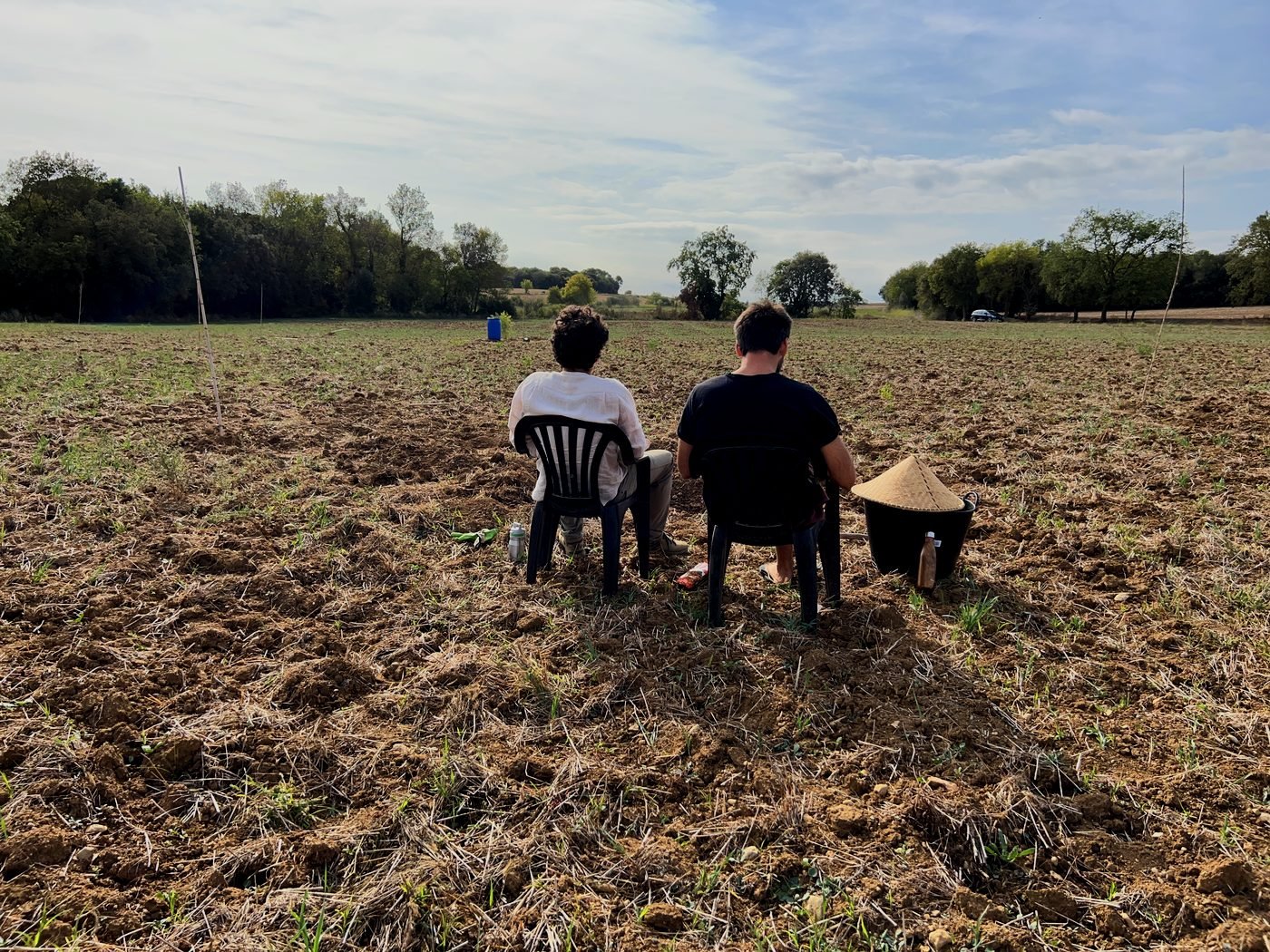
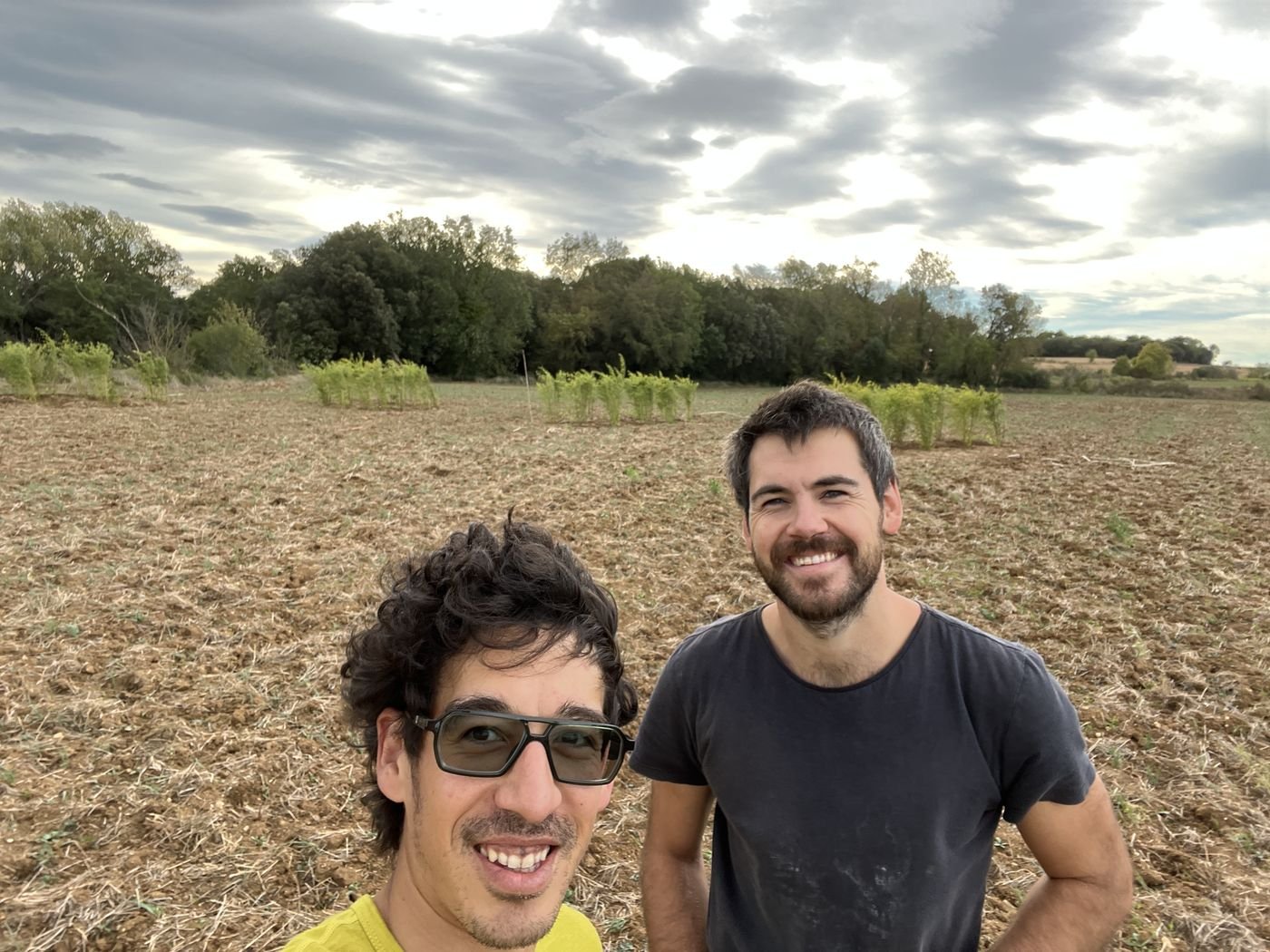
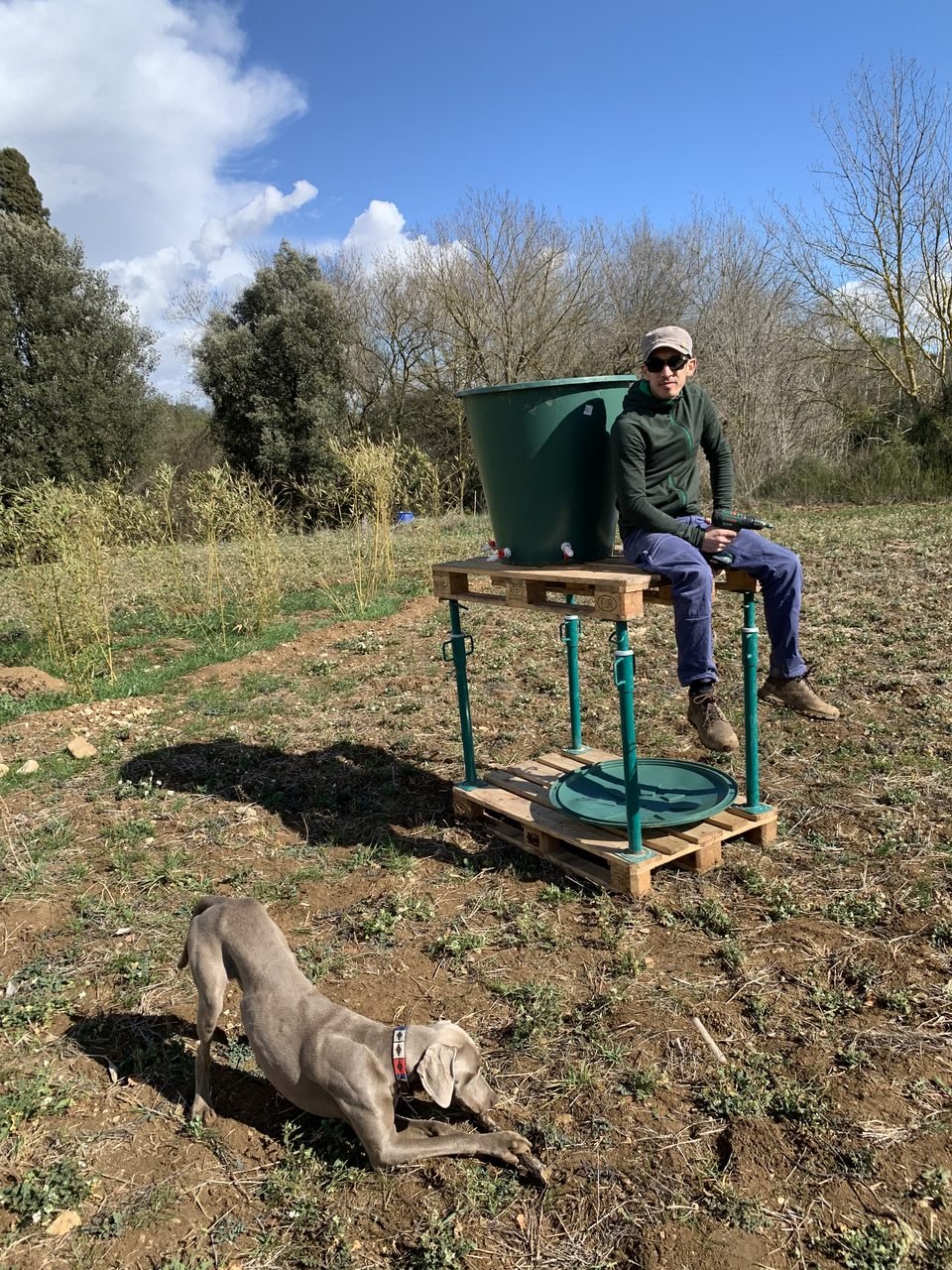
Andrei
Bamboo aficionado · builds what the field needs
Andrei is a parametric designer by training and can talk about rhizomes for longer than most people can listen. He is happiest with soil on his boots and a new species to try, and he is usually the one who says "let's just build it" when the field needs something that does not exist yet.
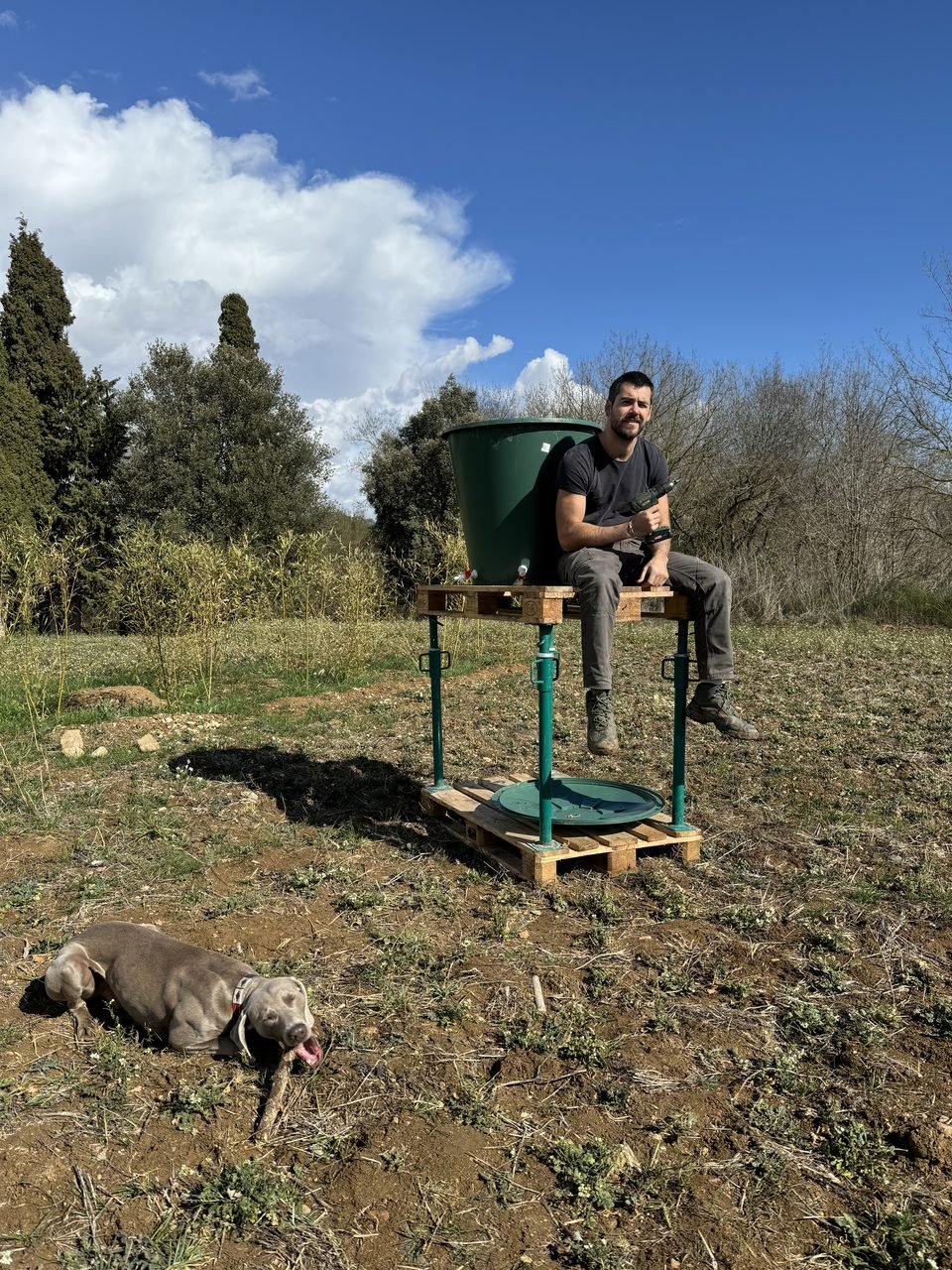
Kevin
Bamboo aficionado · water, tools and numbers
Kevin is an environmental engineer by training and a maker by habit. He looks after the water, the tools and the numbers, and he has yet to meet a problem he would not try to solve with bamboo.
Honourable mention: Rio the dog. He supervises every job in the field, inspects all sticks personally, and made it into both team photos without being asked.
Impressions
Moments from the field, straight from our Instagram.
Instagram posts will appear here once their links are added.
Follow @camp_bambuContact
Get in touch
Questions about bamboo, workshops, supply or a visit to the farm? Write to us.
- Farm
- Camp Bú
17744 Navata, Alt Empordà
Girona, Catalonia, Spain - hello@camp-bu.com
- @camp_bambu
- Visits
- Write to us before you come. For visits you can also contact the property directly. It has its own website: mascancreus.com
Send a message
Contact
Thank you
Your message is on its way. We will get back to you as soon as we can.
Support
Become a patron
Your donation plants bamboo, funds open research and keeps our workshops affordable.
Camp Bú on Tipeee
Donations are handled here directly or through Tipeee. There you can leave a one-time tip or support us every month.
Where the money goes
Planting
New running and clumping species, irrigation and care for young plants.
Research
Greener farming and processing techniques, published openly.
Treatment
Boron soaking so local culms meet the quality designers need.
Education
Programs and hands-on workshops for growers and makers.